Photographic strategies
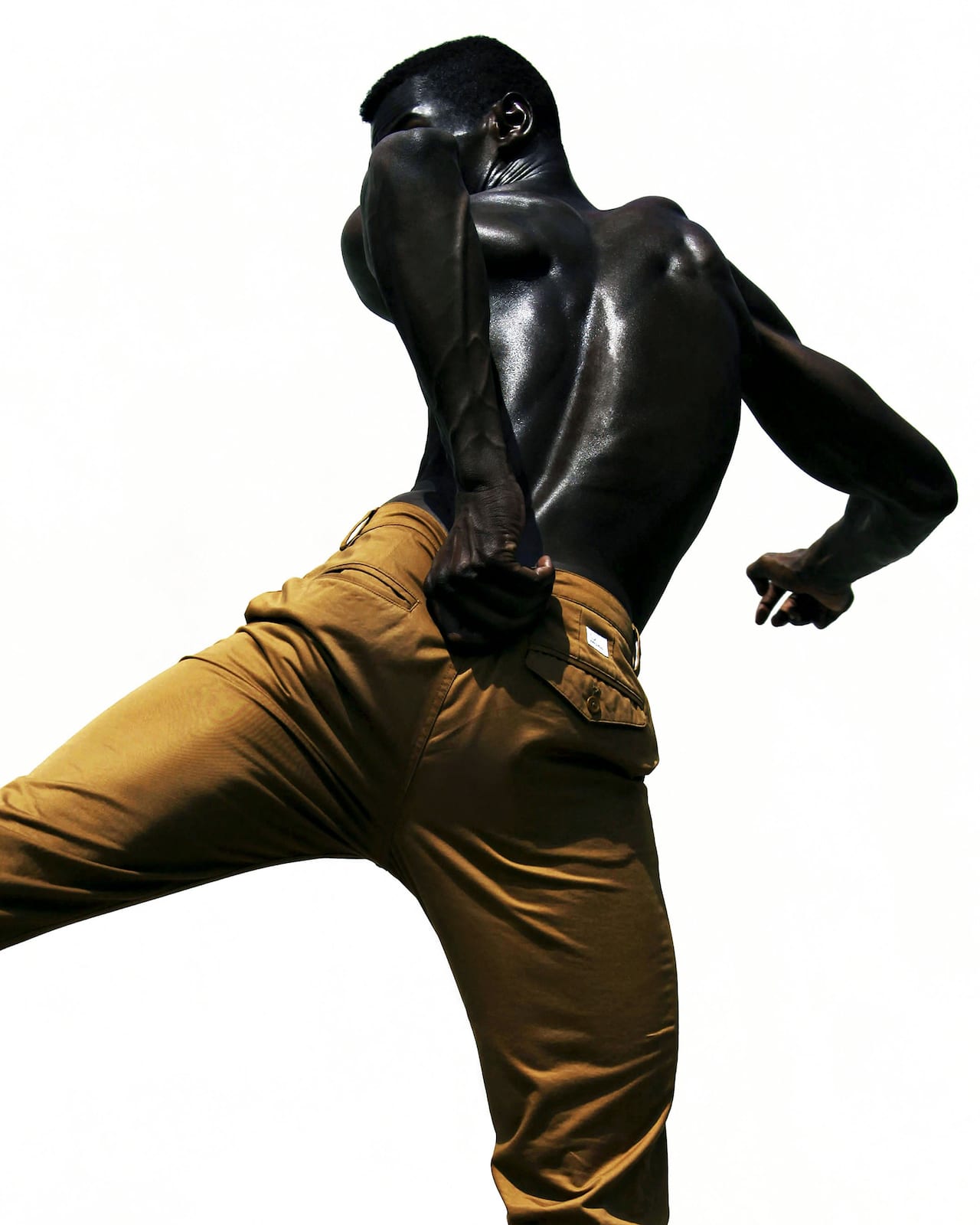
1) Dana Scruggs is originally from the Southside of Chicago, now Dana Scruggs lives and works in New York as a Photographer and Director. Her work focuses on movement, abstraction and evoking emotion from the bodily form. Dana has previously stated that "the movement, the light, the skin, all of those have become signatures in my work." She started by photographing photographs African American males for her Etsy shop, and her work progressed from there. She likes to play with different lightings, capturing different angles of the model while they move around, and this all provides for a very fluid and special photograph. She photographs the beauty of black male form, capturing images for magazines, editorials, and more. She is passionate about what she does, and captures every photo with meaning and love. Her photos are filled with abstract movement, and interesting positions. The photos she takes are a work of emotion and are established by creating a comfort between her and the models.

2)Barbra Kruger was born in New Jersey. She was mainly working in weaving and painting. However, she felt that her artwork lacked meaning, and in 1976, she quit creating art and pursued a new passion, photography with a meaning. Kruger developed her signature style using large-scale black-and-white images overlaid with text. Her work prompts the audience to interrogate their own positions. Barbra once stated, “to question and change the systems that contain us.” She wants us to consider how our identities are formed within culture, through representation in language and image. She provides a photo, with a thought provoking message. The black and white photo in the background makes the audiences attention mainly gravitate to the primary red message she is addressing. She creates photography with meaning. The background usually pairs with the message, but attention gravitates towards her message.

3) Cindy Sherman was born in New Jersey in 1954. She usually photographer herself, and worked alone. She uses makeup and special backgrounds as well as props to become someone new. She speaks about how identity is formed and how stereotypes can affect how we see others and ourselves. She liked to add digitally added backgrounds, and she even added a flash photograph to make the photos she was taking look like they were shot at a party. She later would take specific photos of herself portraying femininity from films in 1950s and 1960s. She wanted to shine light on these stereotypes of women. Cindy continued to make works that challenged assumptions about beauty and status. She took on a role of photographing clothes for Balenziaga, and when she shot these photos, she made up background information for these character. She would use heavy makeup, wigs, specific facial expressions, and give these characters a life. She stated that these photos of her "Maybe they would like to be working in the fashion business." She tried to create scenarios out of nothing, to create a story.

4) Daido Moriyama is a Japanese photographer, best known for his black and white photography. He is best known for his confrontational black and white images depicting the contrast of traditional values and society in postwar Japan. He liked to take grainy photos with a high contrast. He has a certain aesthetic for blurry, grainy, and out of focus images "embracing a tradition of experimental image making and rebellion against the technical precision promoted by the culture of the time. He captures images of Japan in a state of constantly shifting, and changing in time. He likes to use his photography as an experiment. The blurriness and grain adds personality to the photo, and dates it back in time of struggle. It gives the audience a chance to think about what this photo is trying to describe, since the back portion in a photo like this is blurry. He captured a lot of black and white photos that made the viewers think and puzzle what is going on in people lives after the war. They make you feel all types of emotions.


Comments
Post a Comment